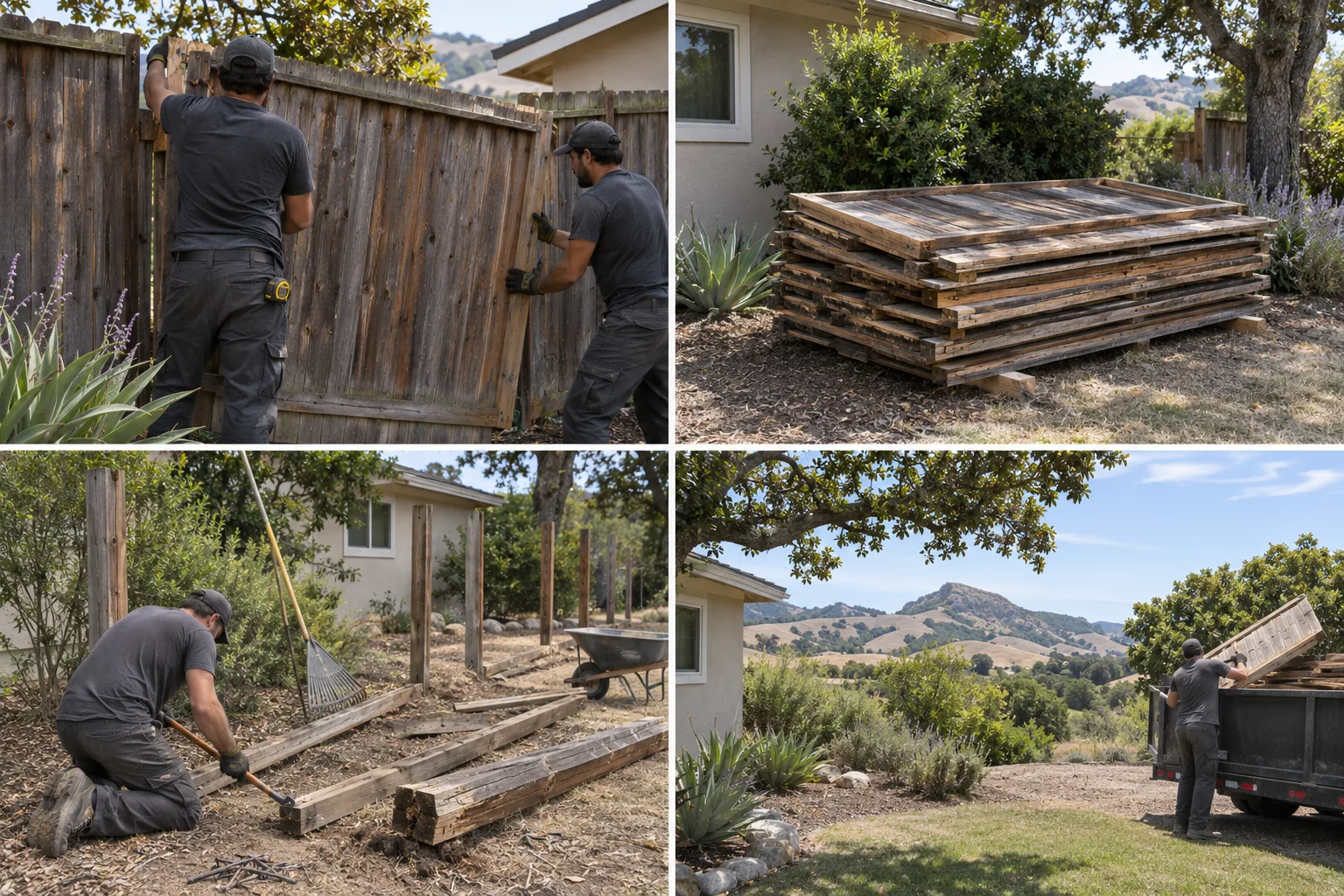
Read the construction
Note whether boards are individual pickets or full panels, whether rails are face-nailed or screwed, and whether posts appear to be set in concrete. Look for gate hardware, lattice, lighting, cables and hose hangers. Do not assume an attachment is abandoned because it looks old.
Clear the work face
Move planters, furniture and loose yard items away from both sides where you have access. Trim only vegetation you are authorized to cut. Keep pets out of the work zone and explain any plants, irrigation or finished surfaces that need protection.
Plan for nails and splinters
Old lumber can break instead of releasing in one piece. Keep children and pets away from the staging area. Ask how loose fasteners, short offcuts and broken pickets will be contained rather than burying them in a mixed pile.
Describe the load honestly
Give the approximate fence length and height, post count, gate count, visible concrete and distance to truck parking. Mention paint, stain, rot, fire damage or suspected contamination so the provider can confirm acceptance before loading.
Before you call
- Length, height and gate count recorded
- Concrete-set posts identified where visible
- Attachments and nearby irrigation noted
- Clear staging area chosen
- Painted, treated or damaged material disclosed
Local disposal and excavation checks
San Luis Obispo County IWMA lists current construction and demolition facilities and advises customers to confirm accepted materials, hours and fees directly. If fence-post work will disturb soil, use California’s proper utility-notification process and wait for the required response before excavation.
Planning the service itself? Review wood fence removal, then call with the fence line, access and timing.