Identify the panel system
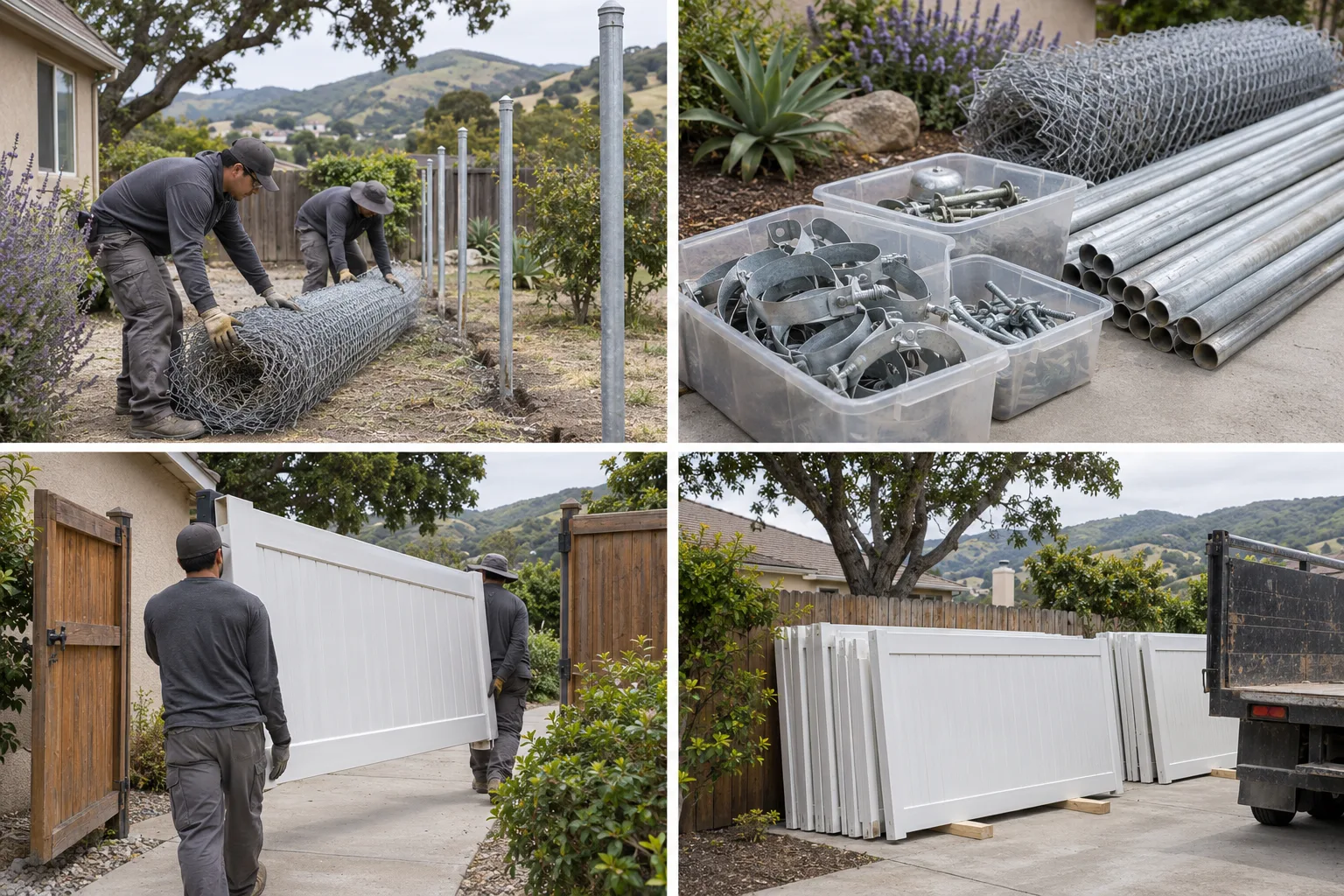
Look for routed posts, brackets, caps and rails that lock together. Some posts contain reinforcement and some gates include metal frames. A photograph of a typical bay and a gate helps the provider understand the system.
Check brittleness and damage
Sun-aged vinyl may fracture when flexed. Point out cracks, burned sections and panels already under stress. Keep people away from the staging area because broken edges can be sharp even when the material feels light.
Measure the turns
Record panel length and the narrowest gate or corner on the carry route. A long section may need to be reduced before it can leave the yard. Note stairs, slopes and landscaping that limit the turn.
Plan material separation
Keep vinyl, metal reinforcement, hardware and concrete-bearing posts identifiable. Local facilities and providers may handle those materials differently, so do not promise recycling or reuse until the destination confirms acceptance.
Before you call
- Panel length and route turns measured
- Gate frames or post inserts identified
- Cracked or brittle sections disclosed
- Staging area protected from wind
- Material acceptance confirmed
Local disposal and excavation checks
San Luis Obispo County IWMA lists current construction and demolition facilities and advises customers to confirm accepted materials, hours and fees directly. If fence-post work will disturb soil, use California’s proper utility-notification process and wait for the required response before excavation.
Planning the service itself? Review vinyl fence removal, then call with the fence line, access and timing.